Joyous Ocean — Live Site
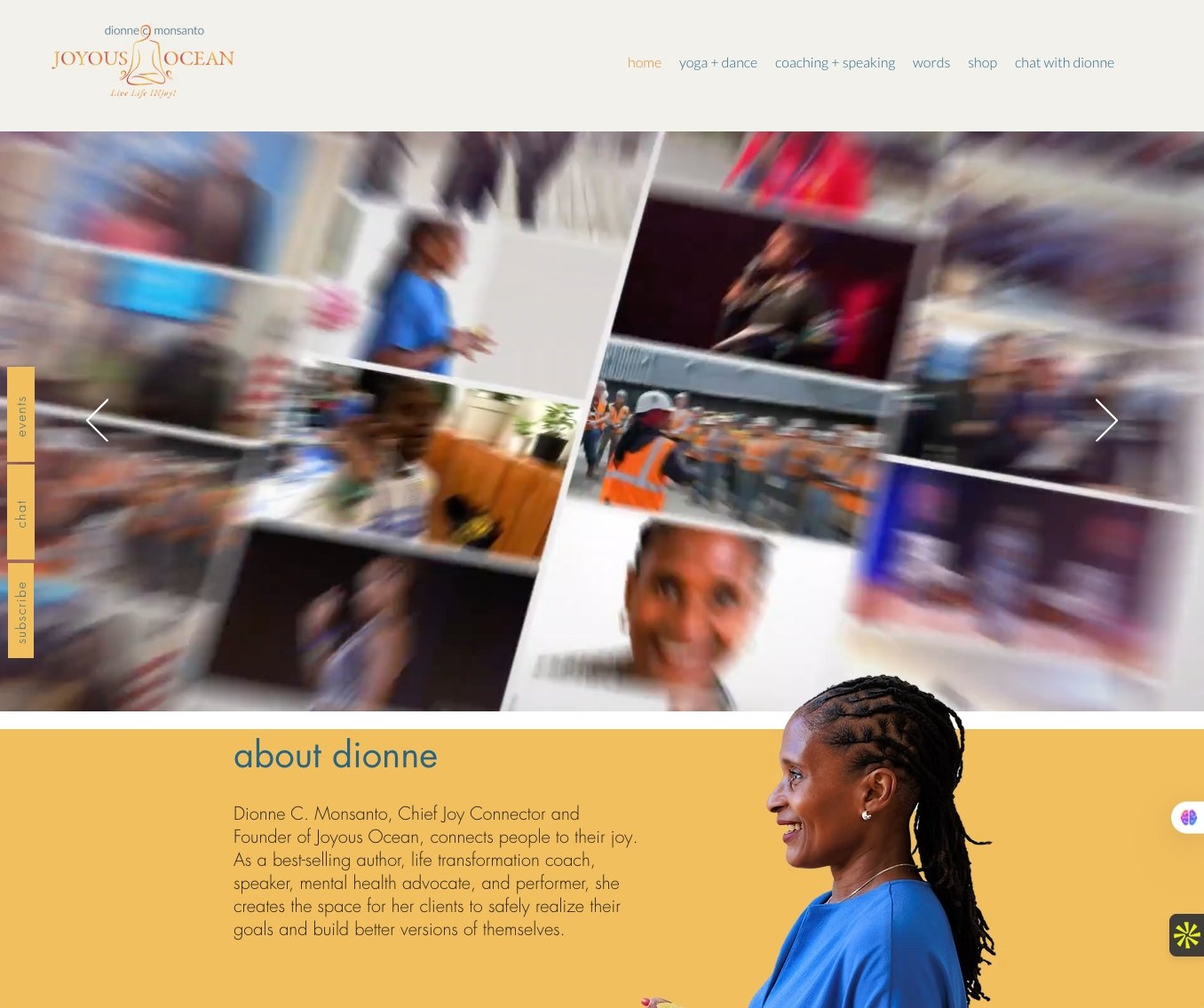
Website redesign and checkout flow rebuild by Moor Graphix
Every time a student clicked "buy," they left her site. Every time a potential coaching client landed on her page, they couldn't find what they were looking for. A teaching yogini with 20+ years of practice was being undersold by her own digital presence. Moor Graphix changed that.
Website redesign and checkout flow rebuild by Moor Graphix
Imagine building a 20+ year practice in yoga — products developed from lived experience, coaching shaped by thousands of hours of teaching — and watching potential students land on your website, get confused, and leave.
That was the reality for Joyous Ocean. The practice was deep. The knowledge was real. But the digital platform was creating friction at every point of potential connection — sending customers away to pay, burying the coaching offer, and projecting a credibility gap that didn't match who she actually was.
Moor Graphix doesn't start with templates. Every engagement starts with the Cultural Alchemy framework — a process of extracting the authentic truth of a brand and encoding it into every layer of the digital infrastructure.
For Joyous Ocean, that meant one guiding question: what does her practice actually deserve? The answer drove every decision — the information architecture, the commerce integration, the visual language.
The redesign wasn't cosmetic. It was structural. When the foundation is right, everything built on top of it compounds.
Mapped her three income streams — physical products, digital offerings, coaching services — and built distinct, purposeful site sections for each. No more guessing which path to take.
Removed the PayPal redirect entirely. Customers now complete every purchase inside her ecosystem — building trust at every touchpoint, not breaking it.
Restructured every page so first-time visitors immediately understand who she is, what she offers, and what to do. Clarity converts. Confusion doesn't.
Brought the aesthetic in line with the depth of a 20+ year yogini practice — a digital presence that earns credibility before a single word is read.
Vanity metrics don't tell the real story. The most honest signal of a successful redesign is behavioral: did the client start promoting the site? Did the feedback change? Did the platform finally match the person? For Joyous Ocean — yes, yes, and yes.
Before the redesign, every sale sent customers away from her site to complete payment through PayPal. That handoff cost her trust, brand continuity, and conversion rate. Now every transaction — product purchase, coaching booking, digital download — happens inside her platform. She owns the customer experience end-to-end.
After launch, the client actively began pointing people to the site and gave direct positive feedback. That behavioral shift is the real success indicator — a platform she was previously unable to promote with confidence became one she was proud to share.
Products, coaching, and teaching now each have their own structured pathways. First-time visitors know immediately who she is and what step to take. The site finally answers the question every visitor brings: "What is this for me?"
A teaching yogini with 20+ years of embodied knowledge now has a digital home that reflects the depth of her expertise — not just a website, but a professional platform that earns trust before anyone reads a word. The visual identity and the person behind it finally match.
"When a brand finally fits, the owner starts to promote it. That behavioral shift is the only case study that matters."
— Sid Washington, Moor Graphix
Every Moor Graphix engagement is driven by one core belief: the most powerful brands are the ones most truthful about who they are. We don't impose a visual style — we extract the authentic identity and encode it into infrastructure that grows.
For Joyous Ocean, that meant stripping the friction between her practice and her platform. The result wasn't just a better website. It was a platform she could finally build on.
The existing brand and website didn't match the quality of Joyous Ocean's teaching practice, and checkout friction was costing sales — visitors were leaving before completing a purchase.
Moor Graphix redesigned the brand identity and e-commerce platform, streamlining the checkout flow and building a site the founder is proud to promote.
A platform that finally matches the founder's practice as a teaching yogini, with reduced checkout friction and a brand she's confident sharing with her audience.
Moor Graphix builds brand and commerce infrastructure for practitioners, entrepreneurs, and movement-builders ready to stop being undersold by their own digital presence.